
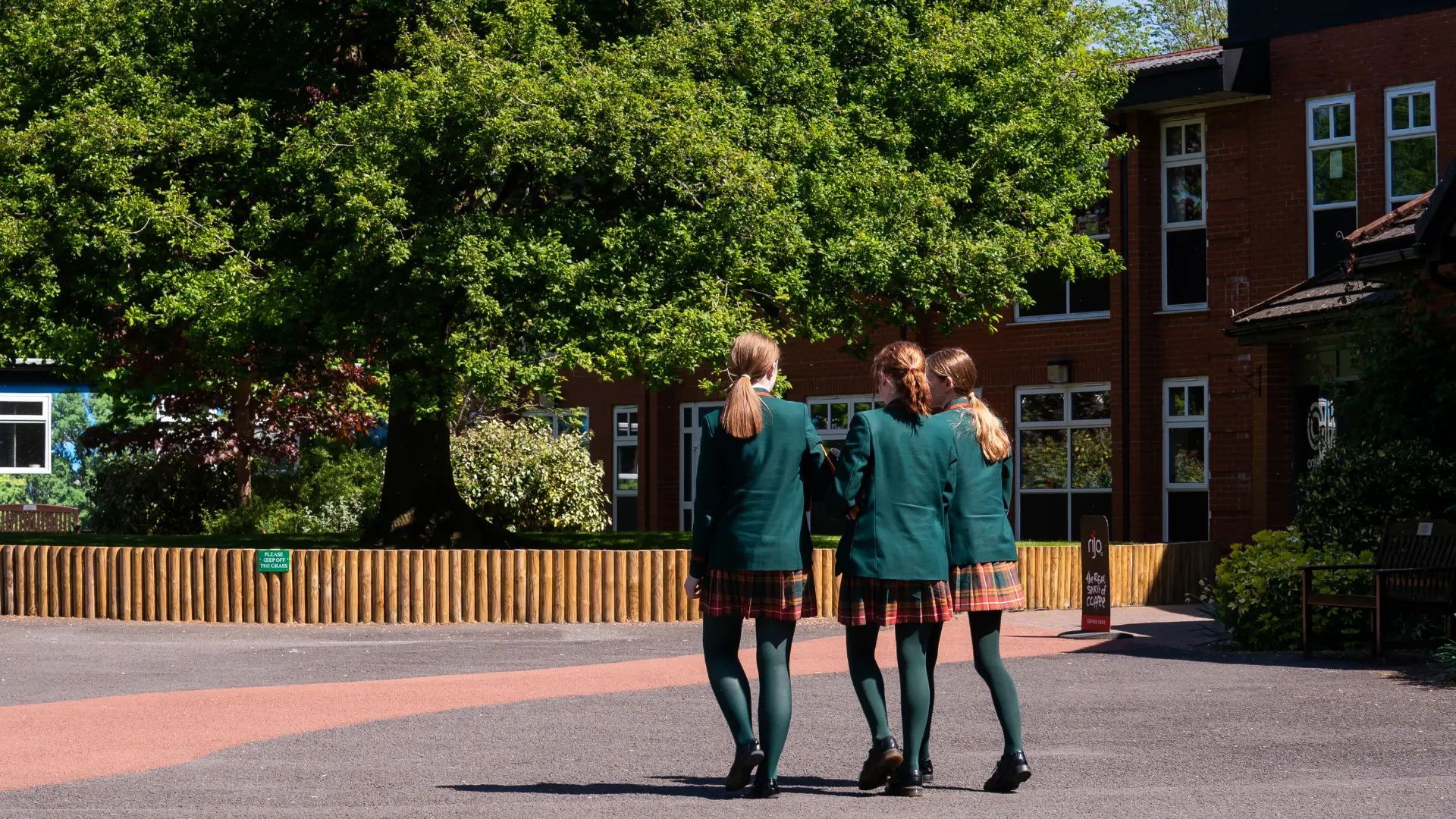
Moving from primary to secondary school is a big step. Even children who are looking forward to Year 7 may feel nervous about finding their way around, managing more homework, meeting several different teachers and making new friends.
Parents often feel a mixture of excitement and apprehension too. Your child may suddenly appear very grown-up in their new uniform, but that does not mean they will instantly know how to organise a timetable, remember their PE kit and navigate an entirely new social world. There will almost certainly be a few forgotten items, tired evenings and emotional wobbles along the way. Preparing for secondary school is not about removing every uncertainty before September. It is about helping your child develop the practical skills, confidence and relationships that will allow them to manage change without feeling they have to handle everything alone.
The transition to secondary school begins before the summer holidays
It is tempting to think of the move to secondary school as something that happens on the first day of Year 7. In reality, the transition begins much earlier. During Years 5 and 6, children begin hearing older pupils talk about secondary school. They may visit schools, attend open events and compare experiences with friends. Once places have been offered, conversations about uniforms, buses, new teachers and friendship groups gather pace. This is why transition visits, taster days and informal opportunities to become familiar with a school can be so valuable. They help turn an unknown place into somewhere a child can begin to picture themselves.
At Oakhill, prospective pupils can visit the school, meet key members of staff and spend time experiencing daily life before a final decision is made. The Admissions team can discuss individual circumstances and arrange appropriate opportunities for a child to get to know the Senior School. Parents can also prepare children in small, practical ways. Encourage your child to take greater responsibility for packing a school bag, checking a simple timetable and remembering equipment. These are ordinary skills, but they can make the beginning of Year 7 feel considerably more manageable.
Managing worries about homework and different teachers
One of the biggest differences between primary and secondary school is moving between subjects and being taught by several different teachers. Children may worry about remembering names, finding classrooms and understanding how each teacher works. They may also have heard alarming playground tales about secondary-school homework, usually delivered by older siblings with great enthusiasm and only a passing relationship with the truth. Reassure your child that nobody expects a new Year 7 pupil to understand everything immediately. Schools know that pupils are learning a new system as well as new subject content.
A regular homework routine can help, but it does not need to become a military operation. Agree on a time and place where your child can work, check that they understand the task and help them think about when it needs to be completed. Try not to take over or correct everything for them. The aim is to help your child become responsible for their work, not to quietly complete Year 7 for a second time yourself. Where homework is consistently causing distress, taking far longer than expected or becoming a source of nightly conflict, speak to the school. There may be a misunderstanding, an organisational difficulty or a learning need that requires further attention.
Year 7 pupil perspective
Amelia says: “Before I started Year 7 I was worried about getting lost, making new friends and having lots of different teachers. It turned out to be much easier than I expected because everyone was so welcoming and the teachers were always there to help. My advice would be not to worry – be yourself, ask questions if you’re unsure and enjoy meeting new people. You settle in much more quickly here than you think.”
Oliver says: “Moving from Oakhill Prep to Senior School felt exciting because I already knew many of the teachers and pupils, so it still felt like the Oakhill family. There were new subjects and higher expectations, but everyone helped us settle in. It was also nice welcoming pupils from other schools and seeing new friendships grow really quickly.”
Organisation and personal responsibility
Secondary school requires children to manage more information. There are timetables, subject books, homework deadlines, PE kits, equipment and sometimes different arrangements on different days. Some children take to this quite naturally. Others appear genuinely astonished each morning that school once again requires a bag. Parents can help by creating simple systems rather than issuing constant reminders. A copy of the timetable at home, a regular place for school equipment and a habit of packing the bag the evening before can prevent much of the morning panic.
Colour-coded folders, checklists and calendar reminders can be useful, particularly for children who struggle with organisation. The system should be simple enough for the child to maintain. An elaborate filing process created by an enthusiastic adult is not much use if the child cannot remember what any of it means. It is reasonable to check in during the early weeks, but gradually move from doing tasks for your child to asking questions that help them remember:
- “What do you need tomorrow?”
- “Is there anything due this week?”
- “Where could you put that so you find it in the morning?”
This gives children responsibility while making it clear that support is still available.
Friendship concerns are often the biggest worry
When adults talk about starting secondary school, they often focus on lessons and homework. For many children, the biggest concern is friendship. Some pupils will move with several friends from primary school. Others may know only one person, or nobody at all. Even children moving with an established friendship group can worry that those relationships will change. Try not to promise that existing friendships will remain exactly the same. Year 7 introduces children to new personalities, interests and social groups. Friendships may change, widen or temporarily become unsettled.
Encourage your child to remain open to meeting new people rather than feeling they must immediately find one best friend. Clubs, sports, music, drama and lunchtime activities can provide easier ways to connect because pupils already have something in common. It is also worth remembering that early friendship groups are rarely fixed. The person your child sits beside during the first week may not become their closest friend, and a difficult lunchtime does not mean the entire transition has failed. At Oakhill, pupils are encouraged to mix across year groups and become part of the wider school community. Manageable class sizes allow pupils to get to know one another while staff can remain attentive to changing friendship dynamics and children who may need additional encouragement.
Planning the journey to secondary school
The journey to school can be a significant part of the transition, particularly if a child has previously walked a short distance with a parent. Before September, practise the journey together. Talk through where your child will wait, what time they need to leave and what they should do if a bus is late or a lift arrangement changes. Make sure your child knows important phone numbers and has a clear plan for unexpected situations. This does not mean rehearsing every disaster that could possibly befall them before breakfast. It simply gives them a few calm, practical steps to follow. Oakhill operates private school buses, and families considering the Senior School can speak to Admissions about current routes, journey arrangements and availability. Parents should investigate travel early, as the practicality of the school day matters just as much as what happens in lessons.
Phones, iPads and technology
Starting secondary school often coincides with children asking for more access to phones, messaging and social media. This can create another layer of worry for parents, particularly when new friendship groups begin communicating outside school. Before September, agree some basic family expectations around devices. Discuss where phones will be kept overnight, what happens during homework and what your child should do if they receive a message that makes them uncomfortable.
Ask the school about its mobile phone policy rather than relying on what your child has heard from somebody’s older cousin. Schools take different approaches, and children need to understand when and where personal devices may be used. Technology is also part of modern learning. At Oakhill Senior School, pupils are provided with an individual iPad to support work in lessons and at home. As with exercise books and other equipment, pupils are helped to use this responsibly as part of their learning. Parents should keep conversations about online life open and proportionate. Children are more likely to ask for help if they know the immediate response will not always be anger, panic or the permanent removal of every electronic device in the house.
Supporting independence without withdrawing support
Year 7 pupils need increasing independence, but independence does not mean being left to cope alone. There can be a tendency to swing between two extremes. Some parents continue to manage every book, deadline and friendship issue. Others decide secondary school means their child must now sort everything out without help. A more useful approach is to remain available while gradually stepping back. Let your child attempt a task before intervening. Ask what they think they could do about a problem. Help them prepare for a conversation with a teacher rather than automatically having the conversation on their behalf. There will still be times when adult involvement is appropriate. A child may not yet have the confidence, language or perspective to resolve a difficult situation. The aim is not to avoid helping, but to provide the least amount of support needed for the child to take the next step.
A Year 7 parent’s perspective
Parents often experience the transition alongside their children. They are adjusting to new communication systems, different teachers and the slightly unsettling experience of knowing less about every detail of the school day.
Mrs S said: “The transition to secondary school was a much bigger step for us as parents than it was for our child! The communication from Oakhill was excellent, and we always knew who to contact if we had a question. Within a few weeks our child had grown in confidence, was enjoying new subjects and had made new friends. The support from staff made all the difference.”
What if your child was not offered their preferred secondary school?
School offer day can be deeply disappointing for families who do not receive their first-choice place. Parents may have spent months imagining their child at a particular school, while the child may believe they will be moving with a group of friends. Not receiving that place does not mean you have to make an immediate, panicked decision. Families can normally accept the place offered while also exploring waiting lists and their right to appeal. Accepting an allocated place does not prevent an appeal and helps ensure that the child still has a school place if the appeal is unsuccessful. The appeals process is independent. Parents are given information explaining how to appeal and the relevant deadline. An appeal is not a second application or a guarantee of a place. The panel considers the admission authority’s reasons for refusing the application alongside the family’s reasons for wanting the child to attend that particular school.
Appeals submitted by the main deadline are generally heard during the summer term. Late appeals, waiting-list changes and places becoming available can mean that uncertainty continues through the summer for some families. Parents should check the latest information from their local authority because dates and arrangements vary by school and year. While an appeal is taking place, families are also entitled to consider other schools.
Oakhill is an independent school, so an enquiry about a Year 7 place is made directly to the school rather than through the local authority allocation process. This gives parents another option. You can speak confidentially with Oakhill, ask whether a suitable Year 7 place may be available and arrange a visit to explore the Senior School. Making an enquiry does not commit you to changing your plans. It simply allows you to understand the alternatives rather than spending the summer feeling that there are none. Oakhill is non-selective and considers whether the school can appropriately meet each individual child’s needs. Following an initial visit, taster days may be arranged so that the family, child and school can make an informed decision.
What to expect during the first half-term
The first half-term of Year 7 can be exhilarating and exhausting. Children are processing new names, subjects, routines, buildings and expectations every day. Your child may come home full of news one evening and respond to every question with “fine” the next. They may be unusually tired, irritable or hungry. This is not necessarily a sign that something is wrong. Adjusting to a new environment takes considerable energy. Try to keep home life relatively predictable during the early weeks. Protect sleep, avoid over scheduling every evening and give your child opportunities to talk without demanding a detailed report as soon as they walk through the door.
Small mistakes are part of the transition. A forgotten book, missed instruction or awkward social moment does not need to become a family crisis. Help your child work out what to do next and keep the incident in proportion. By the end of the first half-term, many pupils have begun to understand the rhythm of the school day. They know their teachers, have found their way around and are developing new friendships. Some children take longer, and progress is not always a straight line.
A form tutor’s perspective
A form tutor often has an important overview of a pupil’s transition, bringing together information about lessons, friendships, organisation and general wellbeing.
Mrs H, a form tutor at Oakhill says: “The first few weeks of Year 7 are about much more than learning a timetable. We spend time getting to know every pupil as an individual, helping them build confidence, establish routines and develop friendships. If a pupil needs extra reassurance, we work closely with families so that every child feels known, supported and ready to make the most of Senior School.”
When should parents contact the school?
Parents do not need to contact the school about every forgotten pencil or minor disagreement. Children need space to learn from small mistakes and resolve ordinary difficulties. However, you should get in touch if a concern is persistent, worsening or affecting your child’s wellbeing, attendance, learning or relationships. This may include:
- Regular distress before school.
- Persistent sleep problems or physical symptoms linked to school.
- Repeated friendship difficulties or social isolation.
- A significant change in behaviour or mood.
- Homework regularly taking far longer than expected.
- Your child repeatedly losing equipment or missing deadlines despite support.
- Concerns about bullying, online behaviour or safety.
- A child saying they feel unable to approach anyone at school.
You do not need to arrive with a diagnosis or a complete solution. Sharing what you are noticing allows home and school to compare information and decide whether any further action is needed. Oakhill places a strong emphasis on communication between families, form tutors and teaching staff. Our average class size is around 15, allowing teachers to get to know pupils individually while pupils still have opportunities to form a range of friendships.
Questions to ask when choosing a secondary school
Whether your child is in Year 5, preparing for transition in Year 6 or reconsidering their options after school allocations, a visit can tell you far more than a prospectus alone. Useful questions include:
- How are new Year 7 pupils introduced to the school before September?
- Who will be my child’s main point of contact?
- How do you help pupils joining without an established friendship group?
- What happens if a child becomes lost, overwhelmed or worried?
- How is homework set and recorded?
- What support is available for organisation and study skills?
- How are friendship concerns handled?
- What is the school’s approach to mobile phones and online safety?
- What transport options are available?
- How and when should parents contact the school?
- Can my child spend time in the school before we make a decision?
Notice how staff speak to your child as well as how they speak to you. A school may have excellent facilities, but the important question is whether your child can imagine learning, participating and gradually becoming more independent there.
Preparing for more than the first day
A successful move to secondary school is not measured by whether a child walks through the door confidently on the first morning. It is a gradual process of learning new routines, developing relationships, making mistakes and realising that they can cope. Parents play an important role, but they do not have to anticipate and solve every problem. Children need practical preparation, realistic reassurance and adults who remain interested without taking control of the entire experience. Whether your child is moving from Oakhill Prep, joining from another primary school or considering Oakhill after an unexpected school allocation, the best way to understand the Senior School is to experience it.
Arrange a visit to Oakhill Senior School
A private visit gives you and your child the opportunity to meet staff, see the school during an ordinary day and discuss any questions or concerns about moving into Year 7. Families who have not received their preferred secondary-school allocation are invited to contact Oakhill directly to ask about current availability. You can explore the school while continuing with any waiting-list or appeal process relating to your allocated place.
You may have a child who has recently started in Year 7, but you are considering a move to a different school, as your child has not settled or you have other concerns. We are happy to have confidential conversations with parents who find themselves in this situation and are considering a move to Oakhill.


